



Mopar parts near me can cover everything from routine filters to model specific Jeep and Dodge repair components. The hard part is knowing which part belongs on your exact vehicle. Therefore, parts research should begin with fitment, not price alone. A Wrangler, Grand Cherokee, Durango, or Hornet can use different components across engines, trims, brake packages, and production dates. In addition, electronic parts may need exact connectors and signal ranges. As a result, the right match protects the repair process from avoidable fitment problems.
What Are Mopar Parts?
Mopar is the OEM parts and service source for Jeep, Dodge, Chrysler, Ram, and FIAT vehicles. OEM means original equipment manufacturer. Therefore, genuine Mopar components follow factory specifications for supported vehicle applications.
What does that mean when you need a replacement part? It means Mopar identifies the component through factory vehicle data and an exact part number. Moreover, that process can narrow a broad model search into a specific fit for your vehicle.
A 2026 Jeep Wrangler can use different brake, suspension, electrical, or drivetrain components across configurations. The same principle applies to a Dodge Durango or Hornet. Therefore, model name alone may not identify the correct part.
Genuine Mopar parts also come through the same parts network used by authorized Chrysler, Dodge, Jeep, and Ram retailers. In addition, published warranty terms can apply based on the part and installation path. Coverage should still be checked before purchase because terms are not identical for every item.
Mopar parts near me make the most sense when you want factory based identification before ordering. That step matters most when several versions of a component exist for the same model.
Why Does Your VIN Matter When Ordering Parts?
Your VIN identifies factory configuration details that help match the correct component to your specific vehicle. The VIN is more precise than year and model alone. Therefore, a parts specialist can use it to narrow possible part numbers before an order is placed.
Why can two Wranglers from the same year need different parts? Engine choice, axle setup, brake package, trim, body configuration, and production changes can all alter the correct component. In addition, electrical equipment can change connectors or module requirements.
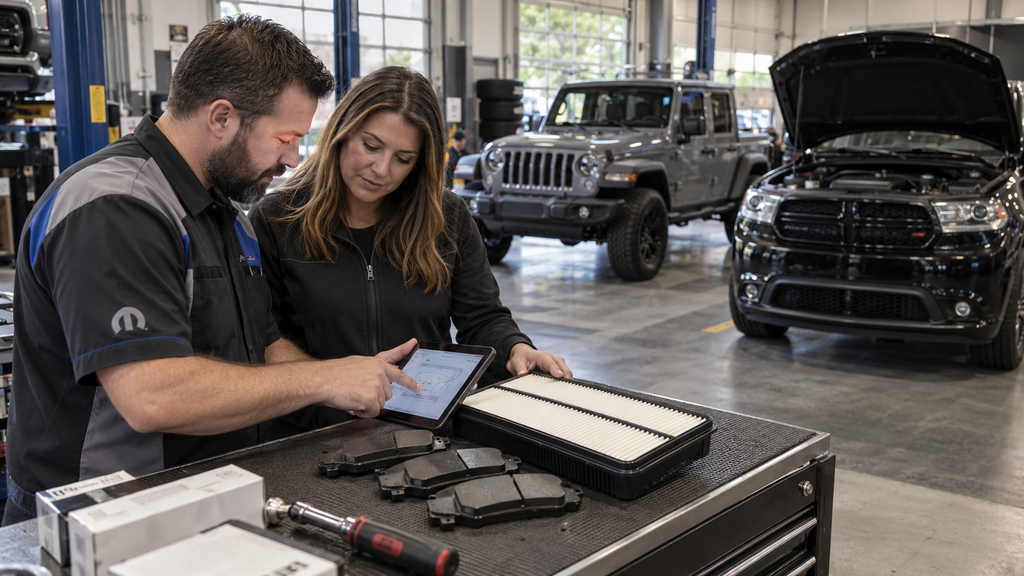
A brake pad is a simple illustration. The pad must match the caliper and rotor package installed on the vehicle. Likewise, an oil filter must match the engine’s mounting and flow requirements. Therefore, a part that looks similar may still be wrong.
Electronic components add another layer. Sensors send specific signals to vehicle control modules. Connectors, resistance ranges, mounting points, and calibration data must match the factory setup. Moreover, a part can physically bolt into place yet still communicate incorrectly with the vehicle.
When asking a Mopar parts near me department for help, bring the full VIN whenever possible. That gives the specialist a direct path to the factory configuration and the matching catalog information.
Mopar and Aftermarket Parts
Mopar and aftermarket parts come from different sourcing paths. Mopar follows the factory parts channel, while aftermarket parts come from third party manufacturers. Therefore, the name on the box is only one part of the decision.
Is every aftermarket part a poor choice? No. Third party manufacturers vary in materials, tolerances, testing, warranty terms, and manufacturing standards. For this reason, the individual manufacturer and part specification deserve review.
Some routine components may have several reputable replacement choices. Filters, wiper blades, bulbs, and certain wear items can fall into that group. However, the exact specification still needs to match the Jeep or Dodge application.
Other parts deserve closer scrutiny because they interact with more components. Brake hardware must match dimensions and friction requirements. Sensors must send the correct signals. Suspension parts must preserve mounting geometry. In addition, collision parts must line up with factory mounting points and surrounding panels.
Warranty terms also differ. Mopar publishes coverage for eligible parts and accessories, with terms that can change by installation method. Aftermarket manufacturers set their own terms. Therefore, compare coverage before deciding between two similar components.
Mopar parts near me provide a clear factory reference point. Aftermarket choices can still be evaluated by specification, manufacturer reputation, fitment data, and warranty coverage.
Parts Where Exact Integration Matters
Some repairs leave less room for fitment error than others. The closer a part works with braking, electronics, steering, drivetrain hardware, or body structure, the more exact matching matters.
Brake components must work together as a set. Pads need the correct shape and friction material for the installed brake package. Rotors need the proper diameter, thickness, and mounting dimensions. Therefore, mixing incorrect components can stop the repair before installation is complete.
Sensors and modules require another type of precision. A sensor may measure wheel speed, temperature, pressure, position, or another input. The vehicle expects a specific electrical signal from that component. In addition, some modules may require programming after installation.
Suspension and steering parts also rely on exact geometry. Control arms, tie rod ends, bushings, and related hardware connect at fixed mounting points. Therefore, small dimensional changes can prevent correct installation or alter steering geometry.
Collision parts need similar precision. A replacement panel must line up with neighboring panels, mounting points, lamps, trim, and hardware. Moreover, brackets and structural pieces may serve roles beyond appearance.
When a repair involves these areas, start a Mopar parts near me search with VIN verification. Then confirm the exact part number before ordering. Therefore, the repair begins with a clear component match.
Finding the Right Part Around Mobile
Finding the right Jeep or Dodge part around Mobile starts with good vehicle information. A parts counter can work faster when you provide the VIN, model year, model, and the component you need. Therefore, gather those details before calling or visiting.
If a warning light or repair diagnosis led to the parts request, bring that information too. A diagnostic code alone does not always identify the failed component. However, it gives the parts and service teams useful context when paired with a completed diagnosis.
Before ordering, ask the parts specialist to confirm the part number and fitment. In addition, ask whether the component has installation requirements, programming needs, or related hardware. Some repairs may require seals, bolts, clips, fluids, or calibration steps beyond the main part.
You should also review warranty terms before purchase. Dealer installation, professional installation, and over the counter purchases can carry different published terms. Therefore, knowing the installation plan can clarify what coverage applies.
Mopar parts near me research should end with an exact match, not a broad catalog guess. Bring the VIN, verify the part number, and ask what else the repair requires. That approach gives Mobile Jeep and Dodge owners a clearer path from parts research to a completed repair.
Connect with us

