





Jeep Wrangler Mobile AL drivers have several trims to compare before choosing the body, roof, and trail hardware they want. Moreover, Sport, Sport S, Willys, Sahara, Rubicon, and Rubicon X each take the Wrangler in a different direction. Therefore, trim choice should start with hardware and cabin priorities before colors or appearance packages. Additionally, the differences reach axles, tires, gearing, roof operation, seating, and comfort equipment. Body style also changes passenger access and cargo space before trim equipment enters the decision.
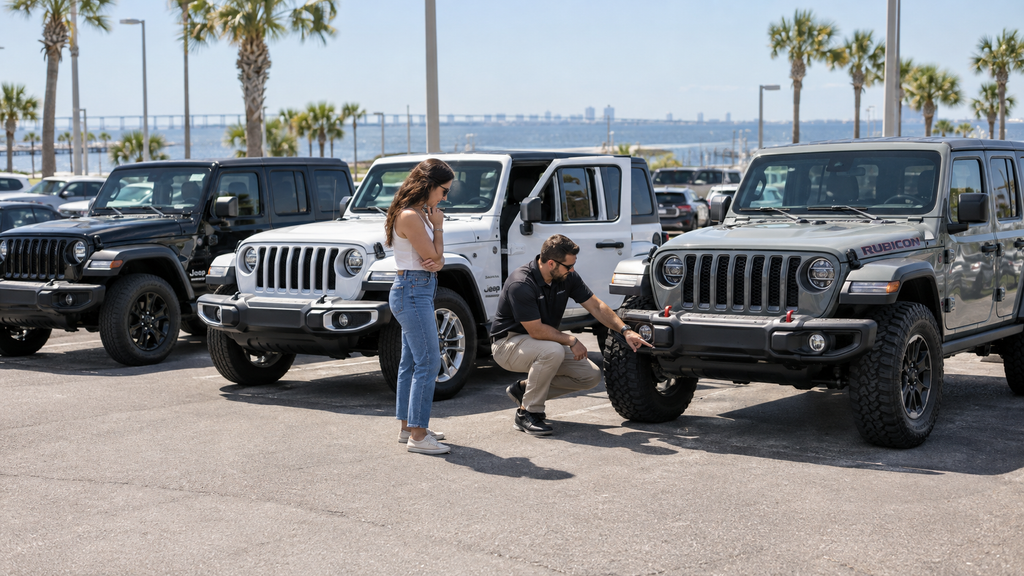
What Changes Across Jeep Wrangler Trims?
Wrangler trims change equipment, axle hardware, roof choices, tires, cabin features, and trail focused components. What separates one trim from another beyond price and appearance? The answer starts with which hardware Jeep adds as you move through the lineup. Therefore, the trim ladder works best when viewed as a series of mechanical and cabin changes.
Sport provides the core Wrangler foundation with four wheel drive and removable exterior components. In addition, Sport S adds more convenience equipment while keeping the same basic road and trail foundation. Willys moves farther toward uneven terrain with larger tires and a rear locking differential. By contrast, Sahara shifts attention toward passenger comfort and four door travel. Rubicon adds deeper gearing, front and rear lockers, and electronic sway bar disconnect hardware.
Those changes matter because each component solves a different problem. A locking differential forces both wheels on an axle to rotate together when traction drops. Moreover, Rock Trac gearing gives Rubicon a lower crawl ratio for slow terrain. Additionally, a disconnecting front sway bar lets the front suspension move more freely across uneven ground.
Therefore, start with the job you want the Wrangler to do most. Then compare which trim supplies the hardware for that job.
Sport Sport S and Willys
Sport, Sport S, and Willys cover the first three major steps in the Wrangler lineup. When does moving above Sport make sense? It makes sense when convenience equipment or trail hardware matters enough to justify the added equipment.
Sport keeps the configuration simple. It provides the Wrangler shape, removable doors, four wheel drive, and access to open air roof choices. Therefore, it suits someone who wants the core Wrangler format without paying for hardware they may never use.
Sport S keeps that foundation while adding more road focused convenience features. With current equipment packages, shoppers may find power features, added driver aids, and cabin upgrades here. However, the central mechanical layout stays closer to Sport than Willys.
Additionally, Willys makes the larger technical jump. It adds 33 inch all terrain tires and a rear locking differential. The locker connects both rear axle shafts so both rear wheels turn together when engaged. Therefore, loose dirt, mud, sand, and uneven ground become easier to cross when one rear tire loses grip.
Still, the tire change matters too. Taller all terrain tires add tread suited to loose surfaces and increase the tire sidewall. Additionally, that sidewall can absorb some sharp trail impacts while maintaining useful grip.
For Mobile area drivers, Willys can fit weekends that include beaches, campsites, hunting property, or rough access roads. Sport and Sport S remain strong choices when pavement and occasional dirt roads make up most trips.
Sahara and Rubicon
Sahara and Rubicon sit farther apart in purpose than their similar Wrangler shape may suggest. How do Sahara and Rubicon serve different driving priorities? Sahara adds cabin comfort, while Rubicon concentrates on specialized trail hardware.
Moreover, Sahara is offered as a four door Wrangler in the current lineup. Its equipment places more attention on heated seating, automatic climate controls, and road friendly cabin details. Therefore, passengers get more comfort during commuting, highway travel, and longer trips.
Rubicon directs more of its equipment budget beneath the body. Front and rear locking differentials let both wheels on either axle rotate together when engaged. Additionally, Rock Trac gearing provides very low gearing for controlled movement across rocks, ruts, and steep grades.
The electronic sway bar disconnect changes front suspension movement. A sway bar normally links left and right suspension movement to reduce body roll. When disconnected, the front wheels gain more independent vertical movement. Therefore, each tire can stay in contact with uneven terrain more easily.
Rubicon also uses larger trail focused tires and protective hardware aimed at rough surfaces. Sahara does not chase the same degree of specialized trail equipment. By contrast, it spends more of its equipment package on cabin comfort and four door road use.
A Mobile commuter who also takes weekend trips may prefer Sahara’s cabin priorities. Someone planning regular technical trail travel may place more value on Rubicon hardware.
Should Roof and Body Style Shape Your Trim Choice?
Body form and roof configuration change passenger access, cargo room, enclosure, and open air operation before trim equipment is considered. Should roof and body style come before final trim choice? Yes, because those choices shape how the Wrangler fits your routine every day.
The two door body keeps the Wrangler shorter and gives it a tighter footprint. Rear passengers enter through the front doors after the front seat moves forward. Therefore, regular rear seat use takes more effort than in a four door body.
The four door layout adds dedicated rear doors and more interior length. That extra length gives passengers easier entry and leaves more room for cargo. Additionally, some trims, including Sahara, center their packaging on the four door body.
Additionally, roof choice creates another major distinction. A soft top can open the cabin quickly and keeps the classic Wrangler feel. The Freedom Top hardtop uses removable roof panels with a more enclosed structure. Sky One Touch adds powered roof movement on equipped four door versions.
Which setup works best around Mobile? Think about heat, rain, passenger routines, storage space, and how frequently you plan to open the roof. Therefore, the right roof choice should match how you expect to use the Wrangler between outdoor trips.
Removable doors add another layer. Door removal changes airflow, visibility, and the open cabin feel. However, owners also need a safe storage plan for the doors when they come off.
Choosing a Wrangler Trim Around Mobile
Choosing among Jeep Wrangler Mobile AL trims becomes easier when you compare four areas in order. Start with body form, then roof setup, cabin equipment, and trail hardware. Each choice narrows the next one without forcing you toward the highest trim.
Start with passenger needs. A two door body works well for fewer occupants and shorter dimensions. A four door body adds easier rear access and more cargo room. Therefore, body selection can remove several unsuitable configurations early.
Next, decide how much open air access you want. A soft top offers simple manual opening. A hardtop adds a more enclosed roof structure. Additionally, Sky One Touch gives equipped four door Wranglers powered roof access.
Then move to trail hardware. Sport covers the basic Wrangler foundation. Sport S adds convenience equipment. Willys adds stronger tires and a rear locker. Sahara emphasizes cabin comfort. Rubicon adds front and rear lockers, deep gearing, and sway bar disconnect hardware.
Finally, match those choices to where you plan to drive around Mobile and beyond. Coastal trips, city commuting, rough property roads, and technical trails place different demands on a Wrangler. Therefore, choose the trim whose hardware matches those plans. Skip equipment you do not need.
Jeep Wrangler Mobile AL shoppers have several clear paths through the lineup. Focus first on the parts you will use, then choose the trim that brings those parts together.
Connect with us

