

Ross Downing Chrysler Dodge Jeep Ram of Mobile

Blog / Mobile CDJR Service

Service A and Service B Terms Explained for CDJR Owners

Service A and Service B Terms Explained for CDJR Owners

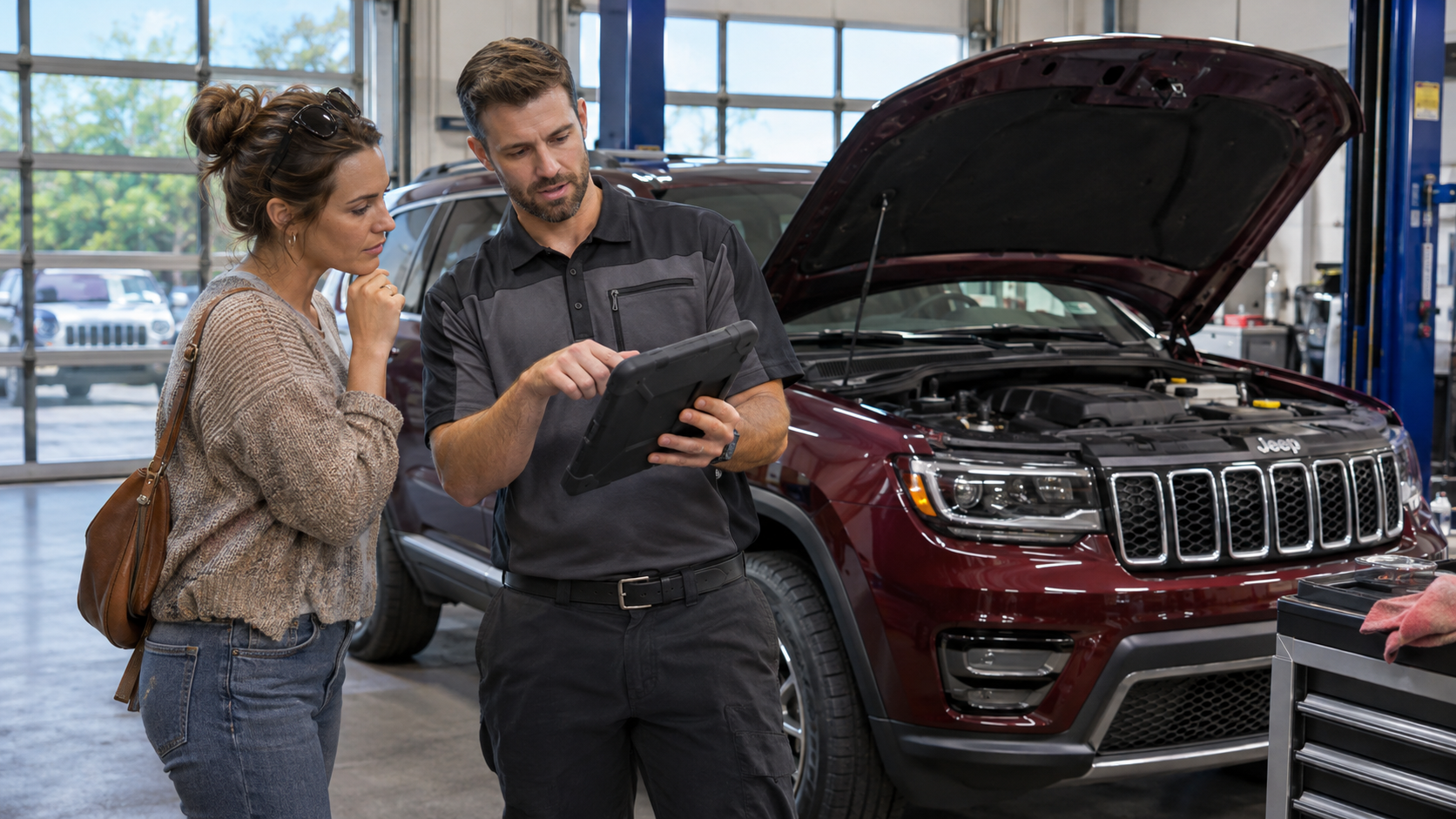
You see Service A and Service B on a maintenance estimate and wonder whether your Jeep needs both. These labels do not describe a universal Chrysler, Dodge, Jeep, or Ram maintenance plan. Instead, your owner's manual identifies the work tied to your vehicle's model year, engine, mileage, and service history. Before booking, ask which tasks the service department proposes and which manufacturer schedule supports them.

What Service A and Service B Terms Mean

Service A and Service B are lettered names used in certain vehicle maintenance programs. Mercedes-Benz, for instance, uses these names for separate scheduled visits with specified tasks. However, those definitions should not carry over to a Jeep Wrangler or Chrysler Pacifica. Instead, each manufacturer publishes its own maintenance guidance for individual vehicles.

Do Service A and Service B describe the same work for every brand? No. The names have no universal checklist across Chrysler, Dodge, Jeep, and Ram vehicles. Consequently, a service provider using either label should explain precisely which tasks it includes. In addition, ask whether the phrase comes from the manufacturer, a shop menu, or a third-party reminder.

For a Dodge Durango, the correct service list comes from the schedule for its engine and model year. Likewise, a Ram 1500 needs instructions matching its engine and vehicle information. Still, a label printed on an appointment reminder cannot replace those details. Moreover, two owners may receive similar labels while their vehicles need different inspections or replacements.

Ross Downing CDJR of Mobile has not supplied a verified package named Service A or Service B. Therefore, the article does not assign either name to a dealership offering. Instead, treat the labels as a reason to request more information, not as proof that a specific package is due.

How CDJR Maintenance Schedules Identify Required Work

Mopar owner resources provide manuals and maintenance information for Chrysler, Dodge, Jeep, and Ram vehicles. Start with the manual matching your exact model year and powertrain. Then find its scheduled maintenance section and compare the listed tasks with your current mileage. Moreover, some tasks also have time limits, regardless of distance traveled.

Where can a Jeep owner find the correct maintenance list? The owner's manual and applicable Mopar maintenance resources provide the manufacturer instructions. Therefore, a Wrangler owner should use the schedule matching that Wrangler's engine. A Wrangler 4xe also needs documentation for its electrified powertrain, not a gasoline-only schedule.

Review the maintenance information as separate types of work, not a single unnamed package:

  • Engine oil and filters: Check the appropriate oil specification, reminder instructions, and replacement schedule. However, an oil change may not cover other work due at the same visit.
  • Fluid inspections: Consult the manual for applicable brake fluid, coolant, and other fluid checks. Some fluids follow separate inspection or replacement instructions.
  • Wear item checks: Review the guidance for tires, brakes, and other inspected components. Additionally, inspection findings may call for work beyond scheduled maintenance.
  • Model-specific items: Check requirements for the engine, drivetrain, and installed equipment. A Ram 1500 and Chrysler Pacifica may have different service lists.

Additionally, distinguish manufacturer scheduled work from repairs identified during an inspection. A technician may recommend a repair after checking a component. Therefore, that finding deserves its own explanation and estimate beyond scheduled maintenance.

Why Mileage and Maintenance Reminders Matter

Mileage provides one reference point for scheduled maintenance, but it is not the only one. Elapsed time, prior completed work, and manufacturer instructions also guide service planning. Consequently, two Dodge Durangos showing the same odometer reading might need different tasks. For instance, one may have completed an inspection recently, while the other has no record of it.

Does an oil change reminder identify every maintenance item due? No. It signals an oil service requirement under the vehicle's reminder logic, not a complete checklist. Therefore, a Ram 1500 owner should review the maintenance schedule alongside the dashboard message. Furthermore, some oil reminders use operating data and do not replace the separate mileage or time instructions.

A Jeep Wrangler used for towing or extended idling may have additional schedule instructions for those driving patterns. However, the exact requirements must come from the manual for that Wrangler. A Chrysler Pacifica used for short local trips also needs its applicable schedule. Instead, use the interval for your specific engine and model year.

Service records are another useful reference. For instance, an invoice can show when filters changed or tires received attention. Furthermore, the next visit should account for work already completed. However, if records are missing, tell the service advisor before assuming a task is overdue.

A reminder may also require resetting after the specified maintenance is complete. Nevertheless, clearing a message does not prove the work took place. Therefore, ask the service department to explain completed tasks and document them on the final invoice.

What Vehicle Information to Have Before Scheduling

A service advisor needs enough detail to identify your vehicle and locate its applicable schedule. Start with the make, model, year, and current mileage. Next, confirm the engine or powertrain, since requirements can differ within one nameplate. Additionally, the vehicle identification number, or VIN, provides a precise reference when available.

What should you bring when asking about Service A or Service B? Bring the vehicle details, your reminder message, and any recent maintenance records. Therefore, an advisor can discuss the work behind the label without guessing at your vehicle's history. In addition, this preparation lets you review the proposed scope before booking.

Gather four pieces of information for the conversation:

  • Vehicle identity: Record the model, year, and VIN. These details let the advisor locate information for the correct Chrysler, Dodge, Jeep, or Ram.
  • Powertrain and mileage: Note the engine or hybrid configuration and current odometer reading. The correct maintenance schedule may differ between available powertrains.
  • Reminder details: Copy the exact dashboard wording or appointment notice. Explain when the message appeared and whether it remains visible.
  • Service records: Bring available invoices and dates for recent maintenance. These records show which tasks may already be complete.

For a Wrangler 4xe, identify the hybrid configuration when contacting the dealership. Likewise, a Ram 1500 owner should confirm the exact engine. Consequently, these details support comparison with the manufacturer's schedule.

Questions to Ask Before Booking CDJR Service

A maintenance appointment should begin with a clear explanation of the work under consideration. If a notice mentions Service A or Service B, request the itemized tasks. Then compare them with the manufacturer's schedule for your vehicle. However, a package name alone cannot show whether each proposed service is due.

What should you ask before approving maintenance? Ask which work the manufacturer calls for and which items come from an inspection or shop recommendation. Therefore, you can review the scope, timing, and estimate separately. Additionally, use the same questions when discussing a Jeep, Chrysler, Dodge, or Ram.

Five questions establish a useful starting point:

  • Which tasks are included? Request an itemized explanation of inspections, replacements, fluids, and labor. Avoid relying on a lettered package name alone.
  • Which schedule supports the work? Ask the advisor to identify the applicable model-year maintenance instructions. Confirm that the engine and mileage match your vehicle.
  • Which tasks are due now? Review the maintenance history and time or mileage instructions. Separate already completed work from items still due.
  • Which services are recommendations? Ask whether each item comes from the factory schedule or an inspection finding. Request an explanation before authorizing extra work.
  • What will the visit cost? Request an estimate showing labor, parts, and any diagnostic charges. Ask how changes to the proposed work require your approval.

Ross Downing CDJR of Mobile provides details about available maintenance through its service department. Therefore, bring the correct manual information and ask about unfamiliar terms before authorizing work. When you know which tasks need attention, use the service scheduling page to request an appointment.
Posted in:

Recommended Posts

Jeep Easter Eggs and Hidden Details Across Jeep Models

Jeep Easter Eggs and Hidden Details Across Jeep Models

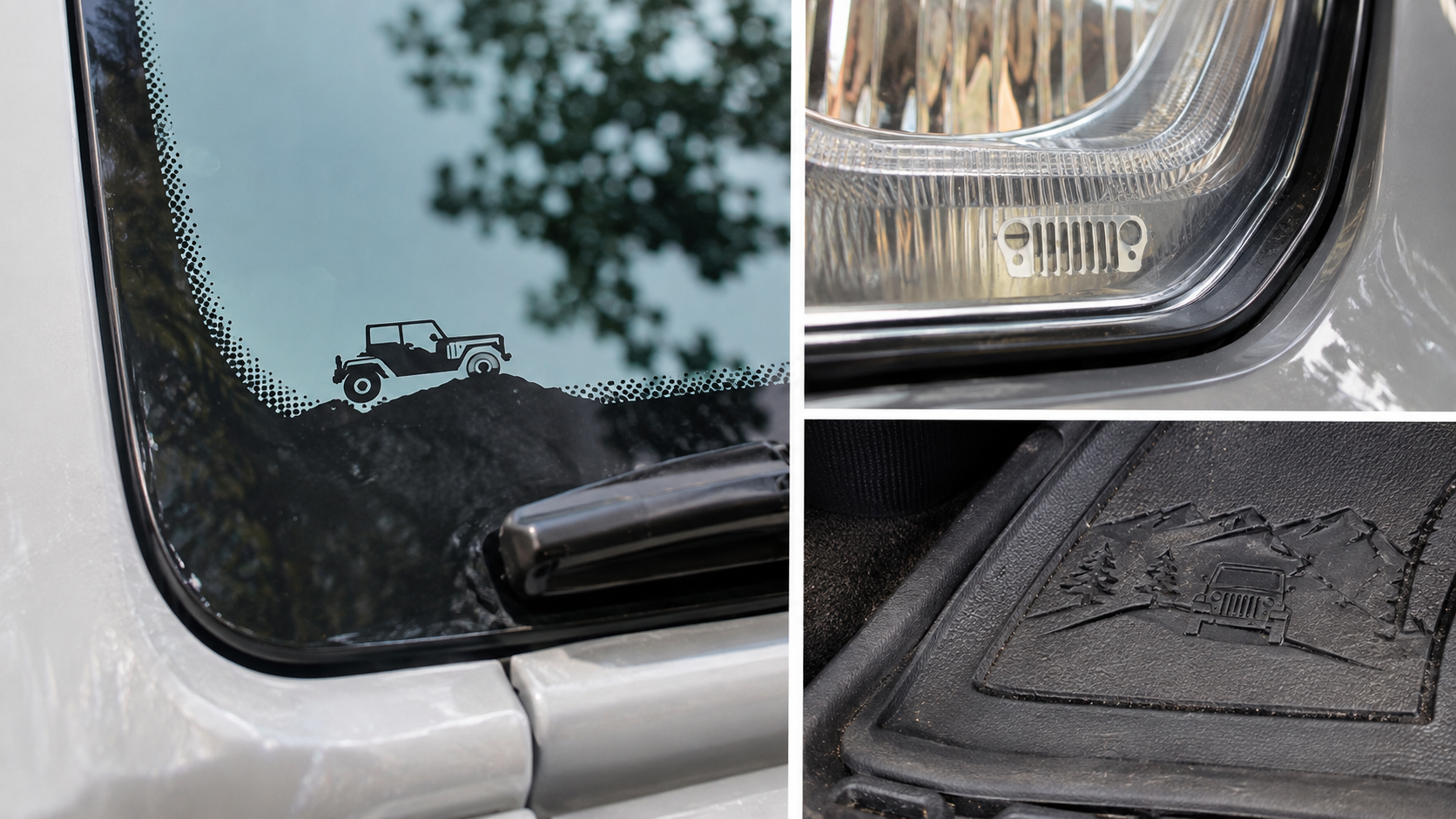
While cleaning your Jeep Wrangler, you notice a tiny vehicle silhouette near the windshield corner. What does that little outline represent? Jeep Easter eggs are intentional design details that reference the brand's heritage, outdoor exploration, or a playful idea. Some sit in glass, while others appear on trim pieces or removable accessories. However, their locations vary across Jeep models and production years. Finding one starts with a closer look at the parts already on your vehicle. What Jeep Easter Eggs Reveal About Jeep Design A Jeep Easter egg is a small graphic or shape that designers place within a vehicle's visible components. It might resemble an older Jeep, the familiar seven slot grille, or an animal. However, these elements do not replace the equipment needed to operate the vehicle. Instead, they add a small discovery to a surface you might overlook. Why would Jeep place a tiny silhouette near a windshield? The design links a modern vehicle with the brand's earlier off road heritage. For this reason, the little vehicle outline serves a different purpose from a mechanical feature. Instead, it represents an idea through a shape that owners can recognize without a label. Jeep has documented the miniature vehicle silhouette on certain Wrangler windshields. The manufacturer has also discussed grille motifs in historical Grand Cherokee headlamp designs. Furthermore, nature inspired graphics appear in documented examples from other Jeep models. These references show how designers work within glass, lighting, and molded trim. A decorative outline has no separate towing, driving, or safety function. However, its position can make an otherwise familiar component worth examining. Therefore, start by identifying the model and year before looking for a particular shape. That information matters because the same design may not carry into another generation. Hidden Jeep Details in Windshields and Exterior Trim Exterior Easter eggs are easiest to notice when light catches a small outline or textured surface. On documented Wrangler versions, a miniature Jeep silhouette appears near a lower windshield corner. Similarly, some historical Grand Cherokee headlamps feature a tiny seven slot grille reference. Furthermore, both examples use parts that already serve essential vehicle functions. Where should you look for a small Jeep on the windshield? Check the visible lower corners of the glass while the vehicle is parked. Still, the marking belongs to certain windshield designs, so its absence does not establish a problem. Additionally, replacement glass may differ from the originally installed windshield. Three exterior areas deserve a careful look: Windshield corners: Examine the glass for a small vehicle outline or another factory graphic. Compare what you find with documented details for your Wrangler's year. Headlamp housings: Look through the clear lens for molded shapes or grille references. However, never open the lamp assembly merely to hunt for artwork. Visible body trim: Inspect accessible cowl panels, exterior moldings, and nearby surfaces for small patterns. Keep your inspection to areas you can see without removing parts. A Jeep Compass gecko is another documented example from selected vehicle versions. However, its placement and presence require verification for the exact model year. Therefore, use photographs of the matching generation as a reference, not as proof of your vehicle's equipment. Jeep Easter Eggs Inside the Cabin Some hidden Jeep details appear where occupants place their hands, drinks, or equipment. Designers may integrate a small outline into molded storage trim or an accessory surface. Furthermore, removable floor mats can display artwork that does not appear on the standard cabin parts. In addition, the location matters because an accessory is not necessarily included with every vehicle. Are Jeep Easter eggs found inside the cabin? Yes. Selected vehicles and accessories have featured subtle grille shapes, trail inspired graphics, and other decorative motifs. However, the exact artwork varies by model and installed components. Therefore, treat an online example as a location clue, not a guaranteed feature. These interior areas offer useful starting points: Storage compartments: Look at exposed walls and molded surfaces in accessible bins. A small graphic may blend into the same texture as the surrounding plastic. Floor mats and cargo liners: Check for scenery or heritage motifs on installed accessories. Replacement mats may carry different designs or no decorative markings. Dashboard and console trim: Examine visible edges and textured panels for small shapes. Do not pull apart trim or disturb switches while searching. For a Wrangler or Gladiator, begin with surfaces you already use during a normal trip. In addition, note whether the vehicle has factory mats or later accessories. That distinction keeps you from attributing every graphic to the original build. Consequently, the owner manual and equipment record can clarify what came with a particular Jeep. Why Jeep Easter Eggs Change Between Models Jeep vehicles share a recognizable design identity, but their component shapes differ. A Wrangler windshield, Compass cowl, and Grand Cherokee headlamp cannot carry identical artwork in every generation. Therefore, designers adapt small references to the space and materials available on each part. A vehicle redesign may also move or replace a graphic entirely. Does every Jeep contain the same Easter eggs? No. The model, production year, trim equipment, and installed parts can change which designs you find. Moreover, the same nameplate may use new glass, lighting, or interior trim after a redesign. A photo from an older Jeep may point you toward an area that looks different today. For instance, the Wrangler windshield silhouette is a documented design, but replacement windshields may lack that marking. Similarly, a graphic on an accessory cargo liner does not guarantee the standard liner carries it. Therefore, distinguish a factory component from an optional or replacement item before drawing conclusions. If you cannot find an Easter egg mentioned online, check the model year attached to that example. Then review photos of the exact component installed on your Jeep. Still, not finding the graphic does not indicate missing required equipment. These small details are decorative, while the vehicle's essential functions remain separate. How to Find Hidden Details on Your Jeep Finding Jeep Easter eggs should feel like a closer look at a vehicle you already know. First, choose a safe place to park, then inspect visible surfaces in good light. For this reason, begin outside and work toward the cabin instead of searching every panel at once. You should not remove glass, lamp housings, or electrical components for this activity. How can you verify that a detail belongs on your Jeep? Match the model year and component against reliable manufacturer information or the exact vehicle. A list may show an older generation or an optional accessory. Therefore, check what is present before expecting a particular animal or silhouette. Use this short discovery checklist: Confirm the model year: Record whether you have a Wrangler, Gladiator, Compass, or Grand Cherokee and identify its year. This narrows the examples. Inspect exterior glass: Look closely at accessible windshield corners for small outlines. Avoid leaning against the glass or disturbing the wiper mechanism. Check visible exterior trim: Look for decorative patterns around accessible lighting and molded panels. Do not remove vehicle components to investigate. Explore cabin surfaces: Examine storage bins, console trim, and installed mats when the Jeep is parked. Remember that accessories can change the artwork. Verify the individual vehicle: Ask about the original equipment and inspect the actual Jeep before assuming a listed detail exists. Photos may miss tiny markings. Still, a Jeep Easter egg is a small reward for noticing the details around you. If you are exploring another model, compare the visible artwork on the exact Jeep you intend to see. Browse new Jeep inventory at Ross Downing CDJR of Mobile. Then inspect available vehicles in person. You may discover a design you had never noticed before.

eep Dashboard Symbols and Warning Lights Explained

Jeep Dashboard Symbols and Warning Lights Explained

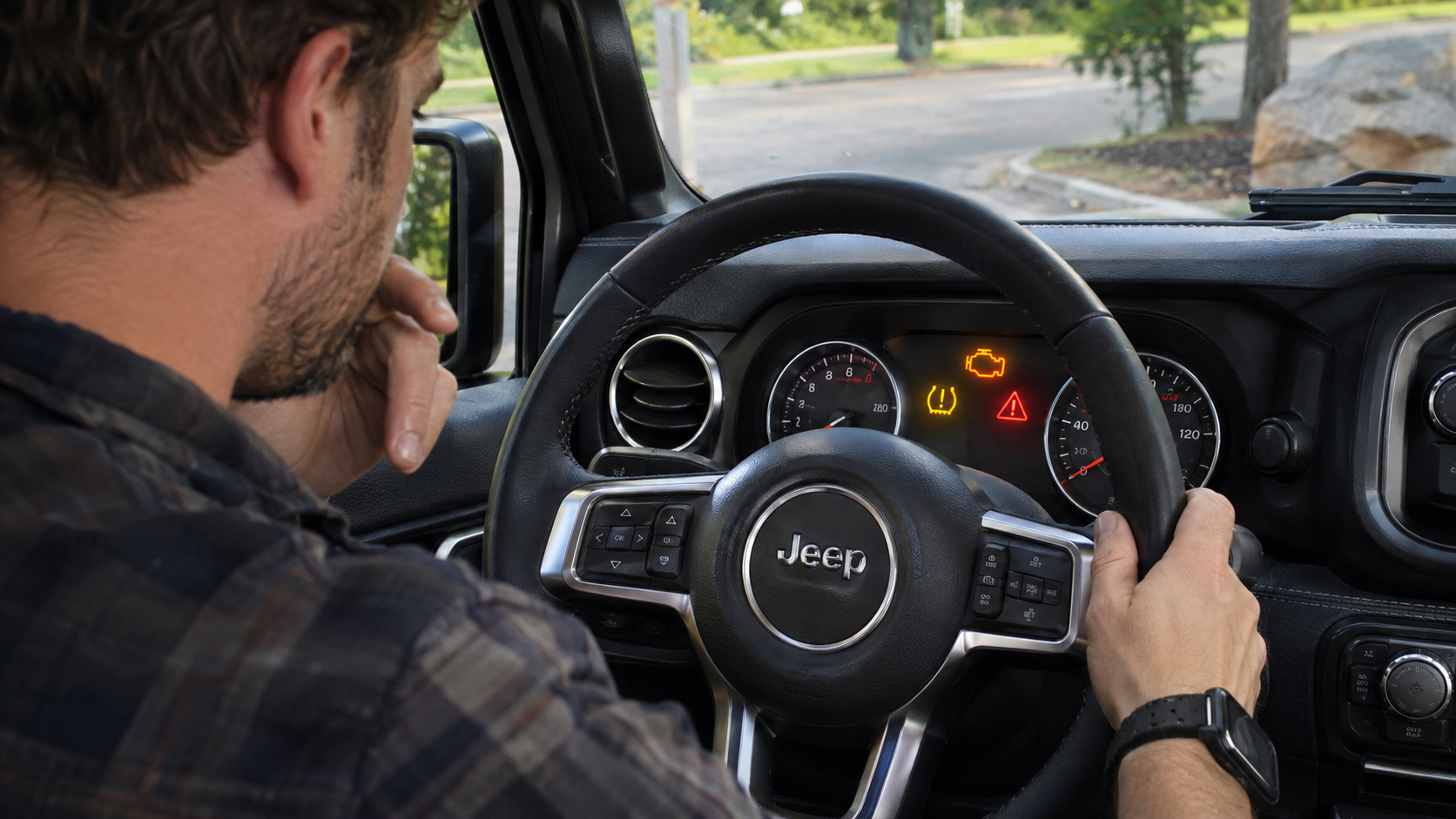
A warning icon appears during your drive, and you wonder whether you should pull over. Jeep dashboard symbols and warning lights identify active features, vehicle status, and potential faults. What should you do when a symbol stays illuminated? Check its shape, color, and accompanying message, then follow the instructions for your exact Jeep. Some alerts require an immediate safe stop, while others call for further inspection. How Jeep Dashboard Symbols Communicate Vehicle Status Your Jeep uses the instrument cluster to share information about its operation. Some icons appear briefly when you start the engine as the vehicle checks its warning circuits. However, others remain illuminated because a feature is active or the vehicle has detected an issue. Therefore, a symbol's meaning comes from more than its color. Does every illuminated dashboard symbol signal a problem? No. Green or blue indicators may confirm that lighting or another selected feature is operating. However, red and amber icons can signal warnings that need attention. A red seat belt reminder serves a different purpose from a red oil pressure alert. Consequently, owners should identify the exact symbol before deciding what action to take. A Jeep Wrangler may display four wheel drive status information during a selected driving mode. By contrast, a Wrangler 4xe has electrified powertrain messages that differ from gasoline models. Additionally, icons and wording can change between model years. Your owner's manual identifies the symbols for the equipment installed in your Jeep. If a message accompanies the icon, read both together before drawing conclusions. Jeep Warning Lights That Require Prompt Attention Some warning lights call for prompt action because continued driving could cause damage or place occupants at risk. Therefore, the correct response depends on the specific symbol and any cluster instructions. Choose a safe place to stop whenever your Jeep directs you to do so. Never continue driving solely because the vehicle still seems to operate normally. Which warnings deserve immediate attention? Oil pressure and high engine temperature alerts can require stopping safely and shutting down the engine. However, the exact instructions may vary by model. Therefore, the owner's manual remains the authority for your Jeep's warning message. Review these serious warning categories before continuing a trip: Oil pressure warning: This symbol may indicate inadequate engine oil pressure. Safely stop and follow the manual's instructions instead of assuming an oil change will resolve it. Engine temperature warning: This alert signals excessive temperature in the engine cooling circuit. Pull over safely and follow the manual before attempting further travel. Brake warning: This symbol can indicate the parking brake or a braking concern. Check its accompanying message and seek immediate assistance if the manual directs you to stop. Charging warning: This indicator can signal trouble with the charging circuit. Follow the manual's directions because continued operation may leave the vehicle without electrical power. For a Jeep Grand Cherokee, an overheating message deserves attention even when no steam appears. Additionally, never open a hot cooling circuit to investigate the alert. If you cannot safely proceed, arrange roadside assistance or towing to a service facility. Common Amber Jeep Dashboard Warning Lights Amber symbols draw attention to a vehicle status or concern that warrants evaluation. However, the color alone cannot tell you whether driving remains safe. Instead, the icon, its flashing pattern, and any dashboard text guide the response. Therefore, read your model's manual before assuming an amber alert can wait. Can the check engine light identify the precise repair your Jeep needs? No. The malfunction indicator reports that onboard diagnostics detected a concern, but further testing must identify its source. A flashing engine warning may require more urgent action than a steady light. Follow your Jeep's manual instructions for either state. Several amber indicators may appear in a Wrangler, Compass, or Grand Cherokee: Check engine indicator: The onboard diagnostic controls report a concern requiring evaluation. A technician needs diagnostic information before identifying any repair. Tire pressure indicator: The tire monitoring equipment detects pressure outside its expected range or a monitoring issue. Check tire pressures according to the vehicle's instructions. ABS indicator: A persistent warning may mean the antilock braking function is unavailable. Follow the manual and arrange an inspection, since normal braking and ABS operation are different functions. Stability control warning: A steady warning may identify a fault or disabled feature. By contrast, a flashing symbol can show traction or stability intervention during driving. A Jeep Compass tire warning does not establish that a tire has a puncture. Temperature changes and other factors can change pressure readings. Therefore, verify pressures using the recommended specifications and seek inspection when necessary. Four Wheel Drive and Driver Assistance Indicators Additionally, Jeep models may display symbols for selected drive modes, traction intervention, and driver assistance features. A Wrangler's four wheel drive status indicator can confirm an engaged setting. However, a service four wheel drive message indicates a different concern. Consequently, the wording beside the icon can be as useful as the icon itself. Does a flashing stability control symbol prove that the feature has failed? No. Flashing can indicate that the controls are actively responding to wheel slip. By contrast, a persistent warning may indicate disabled operation or a fault. Therefore, review the message and consult the model's instructions before changing settings. A Jeep Gladiator may display a stability control indicator during a low traction situation. In addition, Grand Cherokee driver assistance alerts may describe a temporarily unavailable feature or another operating state. Camera visibility, selected settings, and equipment can change which messages appear. Still, do not assume that one model's symbol explanation applies to every Jeep. For a Wrangler 4xe, electrified powertrain indicators also require the correct owner's manual. The gas powered Wrangler does not share every display or warning. When an alert appears, note whether a feature was active and whether the message disappears after a safe stop. What to Check Before Scheduling Jeep Service A clear description of the warning helps a service advisor understand what you observed. Nevertheless, a description is not a diagnosis. Before scheduling an inspection, consult the manual for your Jeep's year and powertrain. If the warning requires stopping immediately, put safety first instead of waiting for an appointment. What should you record when a dashboard warning appears? Capture the icon, any text, and the vehicle's operating state if you can do so safely. However, never handle a phone or take notes while driving. Instead, document the details after parking in a safe location. Prepare these details for your service conversation: Exact symbol and message: Note the icon's color, shape, and displayed words. In addition, a photo taken after stopping safely may preserve useful details. Timing: Record whether the alert appeared at startup, while idling, or during a drive. Mention whether it stayed on or flashed. Vehicle information: Have the model, model year, and approximate mileage ready. Include the powertrain for a Wrangler 4xe or another electrified Jeep. Related changes: Describe unusual sounds, changes in steering, braking, or temperature readings without guessing the cause. These observations provide context for an inspection. Manual instructions: Share any directions shown on the dashboard or listed in the manual. Tell the advisor whether the warning required a safe stop. Ross Downing CDJR of Mobile provides information about available work through its service department. For a nonurgent warning that calls for inspection, use the service scheduling page to request an appointment. If your Jeep displays an urgent warning, stop safely and follow the manual before arranging appropriate assistance.
Dodge Durango Towing Capacity by Engine and Equipment

Dodge Durango Towing Capacity by Engine and Equipment

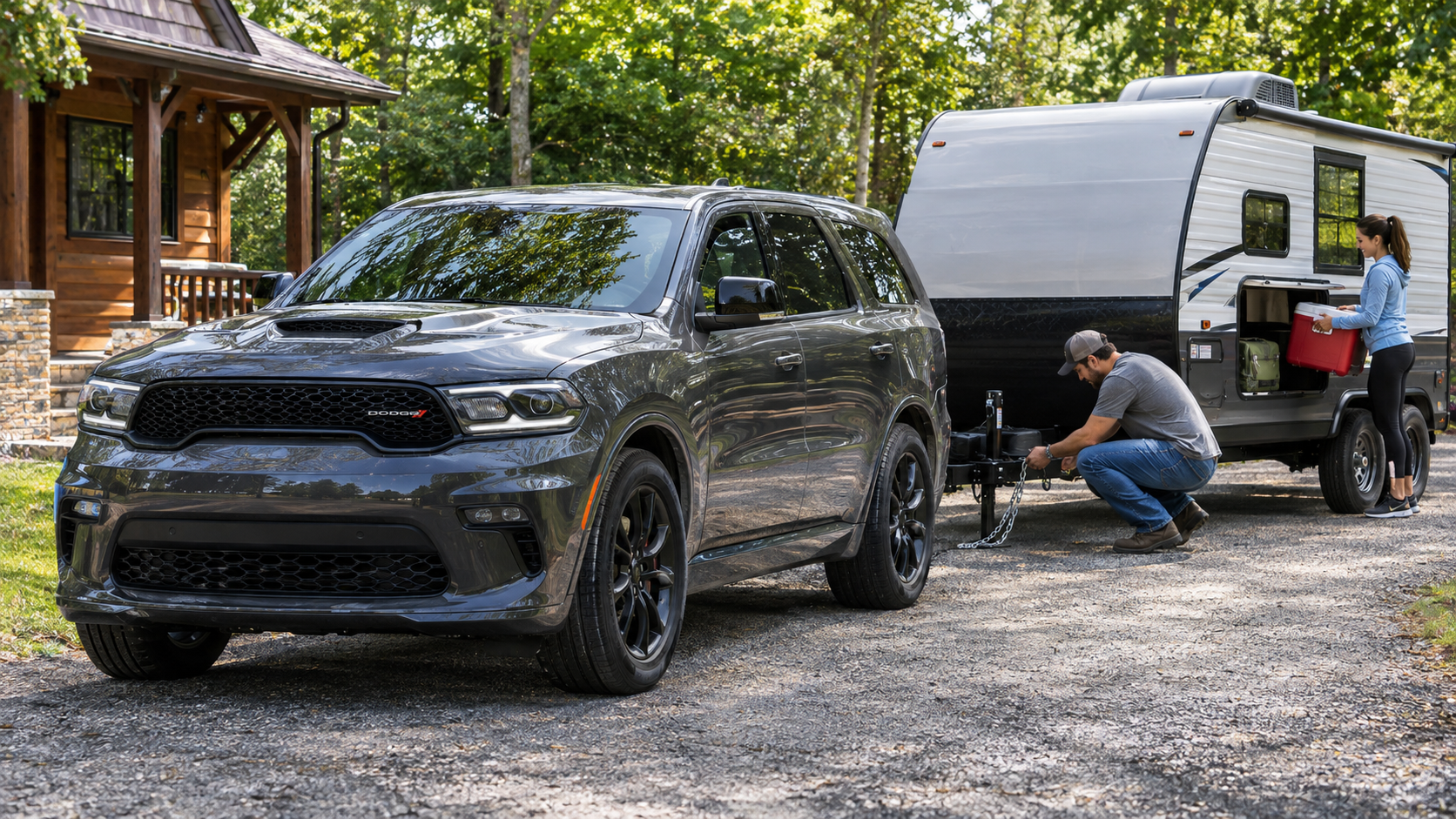
You have a camper in mind and want to know whether a Durango can pull it. Dodge Durango towing capacity changes with the engine, drivetrain, factory equipment, and weight carried inside the SUV. How can you tell whether a particular Durango suits your trailer? Start with its verified tow rating, then check the trailer's loaded weight and the SUV's other weight limits. How Dodge Durango Towing Capacity Changes by Configuration A published maximum towing rating describes a specific vehicle setup, not every Durango on the lot. Dodge publishes an available maximum of 8,700 pounds for properly equipped 2026 Durango configurations. However, other configurations have lower limits. Therefore, an engine badge or trim name alone cannot establish what a particular SUV can tow. Why do tow ratings differ between Durangos? Dodge evaluates combinations of engine, drivetrain, cooling equipment, and factory towing components. A Pentastar V6 configuration and a HEMI V8 configuration may carry different ratings. Additionally, two Durangos with similar engines may have different towing equipment or drivetrains. Each detail can change the manufacturer's published specification. For a Durango with the 3.6-liter Pentastar V6, check the appropriate rating for its cooling and towing equipment. On a 5.7-liter HEMI V8 model, verify the drivetrain and any factory towing package. If you are considering a Durango with Tow 'n Go, confirm that package through its factory equipment record. Instead of applying a model-wide maximum, match the published specification to the exact vehicle. Additionally, the vehicle identification number, or VIN, identifies the Durango you are evaluating. Therefore, ask the dealership to confirm its equipment and applicable owner's manual specifications. This gives you a sound starting point before weighing a trailer. Why Trailer Weight and Tongue Weight Matter A trailer's advertised dry weight is not necessarily its weight when you leave for a trip. Food, water, tools, camping supplies, and other cargo add weight. Therefore, compare the Durango's verified limit with the trailer's actual loaded weight. In addition, the trailer's gross vehicle weight rating establishes its maximum permitted loaded weight. For this reason, four measurements deserve separate attention when assessing a camper or boat trailer: Loaded trailer weight: Include the trailer and everything carried inside or attached to it. This is the weight you must compare with the Durango's tow rating. Tongue weight: The trailer places downward force on the hitch. That force also counts toward the SUV's permitted load. Vehicle payload: Passengers, luggage, and trailer tongue weight all use part of the Durango's available carrying allowance. Check the vehicle's tire and loading label. Vehicle weight ratings: The Durango's gross vehicle weight rating limits its loaded weight. Its combined weight rating governs the loaded SUV and trailer together. Does adding passengers change how much trailer weight you can safely pull? It can restrict the remaining load allowance inside the SUV. For this reason, a family traveling with luggage must count those items alongside tongue weight. Therefore, a towing setup needs to meet every relevant limit, not solely the headline trailer rating. How Dodge Durango Towing Equipment Works First, a hitch connects the trailer to the Durango. However, the receiver is only one part of a towing setup. Additionally, wiring connects the SUV's electrical circuits to the trailer's lights. For trailers with electric brakes, a compatible brake controller sends braking commands to the trailer. Furthermore, cooling components manage heat created by engine and transmission demands while towing. Dodge offers factory towing equipment through packages such as Trailer Tow Group IV and Tow 'n Go. Their included components and availability vary by model year and configuration. Therefore, check the exact factory equipment list before assuming a Durango has everything needed. Pay attention to these four items when checking a specific SUV: Receiver hitch: Verify the installed receiver and its rated limits. A hitch rating does not override the Durango's manufacturer tow rating. Trailer wiring: Confirm that the electrical connector suits the trailer's lighting and brake requirements. The connector type must match the trailer setup. Brake controller: Ask whether the Durango has a compatible integrated controller or needs another approved solution. Trailer braking requirements also vary by trailer and jurisdiction. Cooling equipment: Confirm the factory cooling setup required for the vehicle's published rating. Adding a hitch cannot substitute for missing manufacturer towing equipment. Can an aftermarket hitch increase a Durango's tow rating? No. A stronger receiver cannot change the manufacturer's rating for the vehicle. Furthermore, the weakest applicable weight limit still controls the combination. Therefore, ask for the factory equipment record before relying on an accessory description. Matching a Dodge Durango to a Camper or Boat Trailer A camper and a boat trailer place different demands on a tow vehicle. For instance, a camper may carry water, propane, food, and luggage. By contrast, a boat trailer may carry fuel, safety gear, and equipment in addition to the boat itself. Therefore, the weight printed on an empty trailer is only the beginning of the comparison. Can a Dodge Durango tow your camper? It may, if the fully loaded trailer and hitch load fit the specific Durango's ratings. Water and gear can raise a camper's weight before departure. Instead of relying on its dry-weight label, request a realistic loaded-weight figure. Additionally, a loaded trailer scale measurement provides a clearer comparison when available. For a boat, confirm the combined weight of the hull, motor, trailer, fuel, and equipment. Next, check how the trailer transfers weight onto the Durango's hitch. Additionally, count everyone and everything riding inside the SUV. A trailer may sit below the tow rating while the Durango exceeds its payload or vehicle weight limit. Furthermore, hitch setup and trailer stability deserve attention. Therefore, follow manufacturer instructions for coupling, loading, brakes, and any required weight-distribution equipment. Your configuration must support the complete towing arrangement, not merely the trailer's advertised weight. What to Verify Before Choosing a Dodge Durango Once you know your trailer's loaded weight, compare it with a specific Durango instead of a trim-level assumption. First, check the model year, VIN, engine, drivetrain, and factory towing package. Next, review the manufacturer's rating and the weight labels for that SUV. Additionally, the dealership can clarify which equipment appears on a listing before you make a decision. With that in mind, use these questions to guide the final check: Which tow rating applies to this VIN? Ask for the exact model-year specification and factory towing configuration. Do not substitute the lineup's maximum figure. Which towing components came from the factory? Confirm the receiver, wiring, controller, and required cooling equipment. Check each part against your trailer's needs. What is the Durango's remaining load allowance? Review the loading label and account for occupants, luggage, and tongue weight. Do not evaluate trailer weight alone. What does the loaded trailer weigh? Include water, fuel, gear, and installed accessories. Compare the loaded figure with the applicable trailer and vehicle limits. Are the vehicle and trailer matched correctly? Verify hitch limits, connections, brake requirements, and manufacturer instructions before towing. Ask about anything the listing does not establish. Therefore, a Durango selected for weekend camping should support the trailer and the people traveling with you. Browse the new vehicle inventory to identify configurations worth reviewing. Then contact Ross Downing CDJR of Mobile to confirm its factory equipment and published towing specifications.