





Ross Downing Chrysler Dodge Jeep Ram of Mobile

Blog / Mobile Jeep Service Center

Jeep Dashboard Symbols and Warning Lights Explained

eep Dashboard Symbols and Warning Lights Explained

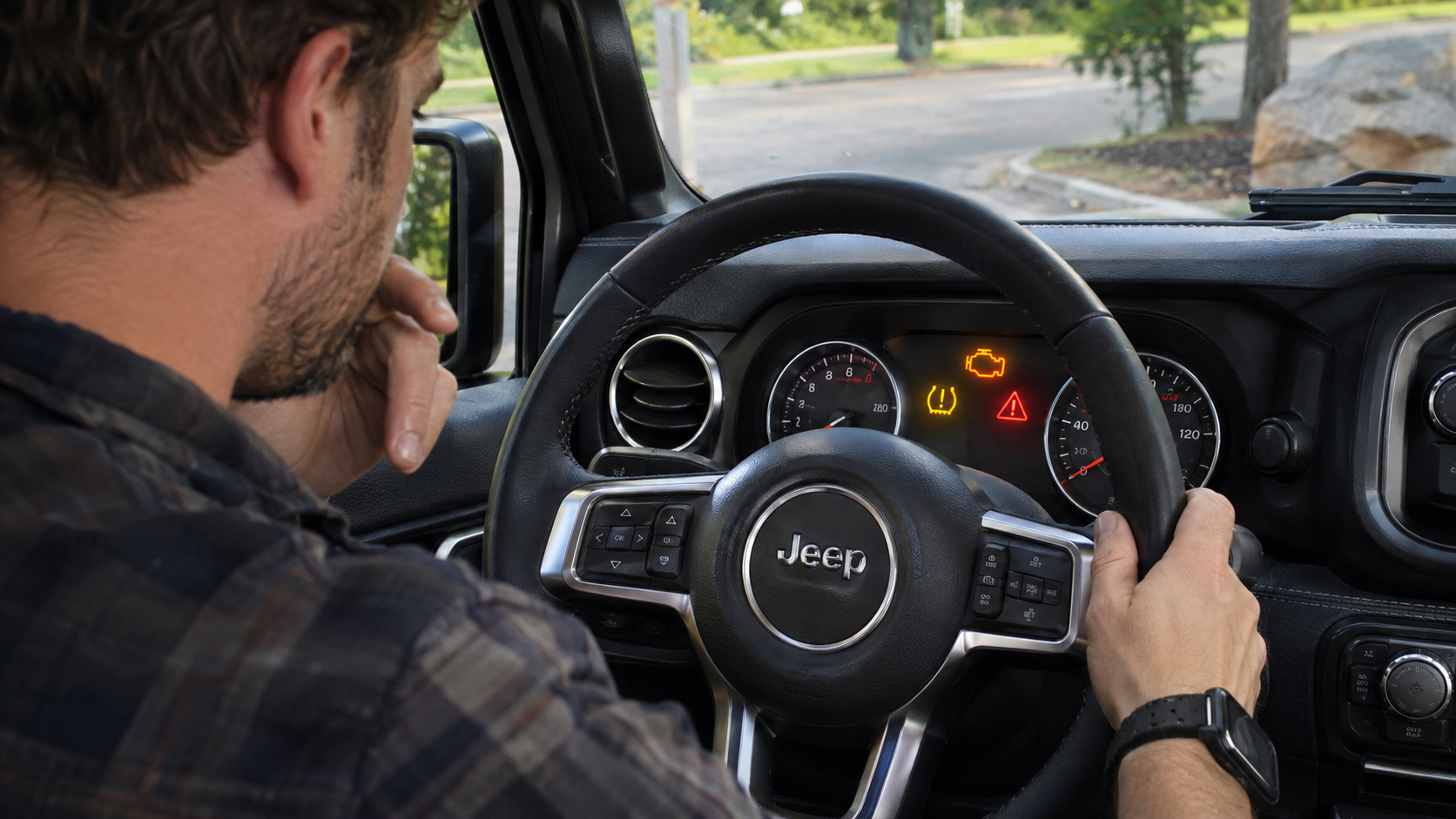
A warning icon appears during your drive, and you wonder whether you should pull over. Jeep dashboard symbols and warning lights identify active features, vehicle status, and potential faults. What should you do when a symbol stays illuminated? Check its shape, color, and accompanying message, then follow the instructions for your exact Jeep. Some alerts require an immediate safe stop, while others call for further inspection.

How Jeep Dashboard Symbols Communicate Vehicle Status

Your Jeep uses the instrument cluster to share information about its operation. Some icons appear briefly when you start the engine as the vehicle checks its warning circuits. However, others remain illuminated because a feature is active or the vehicle has detected an issue. Therefore, a symbol's meaning comes from more than its color.

Does every illuminated dashboard symbol signal a problem? No. Green or blue indicators may confirm that lighting or another selected feature is operating. However, red and amber icons can signal warnings that need attention. A red seat belt reminder serves a different purpose from a red oil pressure alert. Consequently, owners should identify the exact symbol before deciding what action to take.

A Jeep Wrangler may display four wheel drive status information during a selected driving mode. By contrast, a Wrangler 4xe has electrified powertrain messages that differ from gasoline models. Additionally, icons and wording can change between model years. Your owner's manual identifies the symbols for the equipment installed in your Jeep. If a message accompanies the icon, read both together before drawing conclusions.

Jeep Warning Lights That Require Prompt Attention

Some warning lights call for prompt action because continued driving could cause damage or place occupants at risk. Therefore, the correct response depends on the specific symbol and any cluster instructions. Choose a safe place to stop whenever your Jeep directs you to do so. Never continue driving solely because the vehicle still seems to operate normally.

Which warnings deserve immediate attention? Oil pressure and high engine temperature alerts can require stopping safely and shutting down the engine. However, the exact instructions may vary by model. Therefore, the owner's manual remains the authority for your Jeep's warning message.

Review these serious warning categories before continuing a trip:

  • Oil pressure warning: This symbol may indicate inadequate engine oil pressure. Safely stop and follow the manual's instructions instead of assuming an oil change will resolve it.
  • Engine temperature warning: This alert signals excessive temperature in the engine cooling circuit. Pull over safely and follow the manual before attempting further travel.
  • Brake warning: This symbol can indicate the parking brake or a braking concern. Check its accompanying message and seek immediate assistance if the manual directs you to stop.
  • Charging warning: This indicator can signal trouble with the charging circuit. Follow the manual's directions because continued operation may leave the vehicle without electrical power.

For a Jeep Grand Cherokee, an overheating message deserves attention even when no steam appears. Additionally, never open a hot cooling circuit to investigate the alert. If you cannot safely proceed, arrange roadside assistance or towing to a service facility.

Common Amber Jeep Dashboard Warning Lights

Amber symbols draw attention to a vehicle status or concern that warrants evaluation. However, the color alone cannot tell you whether driving remains safe. Instead, the icon, its flashing pattern, and any dashboard text guide the response. Therefore, read your model's manual before assuming an amber alert can wait.

Can the check engine light identify the precise repair your Jeep needs? No. The malfunction indicator reports that onboard diagnostics detected a concern, but further testing must identify its source. A flashing engine warning may require more urgent action than a steady light. Follow your Jeep's manual instructions for either state.

Several amber indicators may appear in a Wrangler, Compass, or Grand Cherokee:

  • Check engine indicator: The onboard diagnostic controls report a concern requiring evaluation. A technician needs diagnostic information before identifying any repair.
  • Tire pressure indicator: The tire monitoring equipment detects pressure outside its expected range or a monitoring issue. Check tire pressures according to the vehicle's instructions.
  • ABS indicator: A persistent warning may mean the antilock braking function is unavailable. Follow the manual and arrange an inspection, since normal braking and ABS operation are different functions.
  • Stability control warning: A steady warning may identify a fault or disabled feature. By contrast, a flashing symbol can show traction or stability intervention during driving.

A Jeep Compass tire warning does not establish that a tire has a puncture. Temperature changes and other factors can change pressure readings. Therefore, verify pressures using the recommended specifications and seek inspection when necessary.

Four Wheel Drive and Driver Assistance Indicators

Additionally, Jeep models may display symbols for selected drive modes, traction intervention, and driver assistance features. A Wrangler's four wheel drive status indicator can confirm an engaged setting. However, a service four wheel drive message indicates a different concern. Consequently, the wording beside the icon can be as useful as the icon itself.

Does a flashing stability control symbol prove that the feature has failed? No. Flashing can indicate that the controls are actively responding to wheel slip. By contrast, a persistent warning may indicate disabled operation or a fault. Therefore, review the message and consult the model's instructions before changing settings.

A Jeep Gladiator may display a stability control indicator during a low traction situation. In addition, Grand Cherokee driver assistance alerts may describe a temporarily unavailable feature or another operating state. Camera visibility, selected settings, and equipment can change which messages appear. Still, do not assume that one model's symbol explanation applies to every Jeep.

For a Wrangler 4xe, electrified powertrain indicators also require the correct owner's manual. The gas powered Wrangler does not share every display or warning. When an alert appears, note whether a feature was active and whether the message disappears after a safe stop.

What to Check Before Scheduling Jeep Service

A clear description of the warning helps a service advisor understand what you observed. Nevertheless, a description is not a diagnosis. Before scheduling an inspection, consult the manual for your Jeep's year and powertrain. If the warning requires stopping immediately, put safety first instead of waiting for an appointment.

What should you record when a dashboard warning appears? Capture the icon, any text, and the vehicle's operating state if you can do so safely. However, never handle a phone or take notes while driving. Instead, document the details after parking in a safe location.

Prepare these details for your service conversation:

  • Exact symbol and message: Note the icon's color, shape, and displayed words. In addition, a photo taken after stopping safely may preserve useful details.
  • Timing: Record whether the alert appeared at startup, while idling, or during a drive. Mention whether it stayed on or flashed.
  • Vehicle information: Have the model, model year, and approximate mileage ready. Include the powertrain for a Wrangler 4xe or another electrified Jeep.
  • Related changes: Describe unusual sounds, changes in steering, braking, or temperature readings without guessing the cause. These observations provide context for an inspection.
  • Manual instructions: Share any directions shown on the dashboard or listed in the manual. Tell the advisor whether the warning required a safe stop.

Ross Downing CDJR of Mobile provides information about available work through its service department. For a nonurgent warning that calls for inspection, use the service scheduling page to request an appointment. If your Jeep displays an urgent warning, stop safely and follow the manual before arranging appropriate assistance.


Posted in:

Related Posts

A gray Jeep Grand Cherokee SUV parked inside a showroom next to two people.

Jeep Service Near Me Appointment Timing for Mobile

Jeep service near me should begin with a clear appointment plan, realistic timing, and an agreed contact method. The selected time usually starts advisor intake. It does not promise immediate technician work. Therefore, your visit may include check in, repair order setup, queue placement, inspection, approval, parts review, and final pickup. Each step protects accuracy and keeps the visit organized. Knowing the sequence can also make transportation planning easier. What Does a Service Appointment Time Mean? A service appointment time marks when you should arrive and begin check in. Additionally, the advisor records mileage, contact details, requested work, and any reported concern. Therefore, the appointment starts the service process, even when a bay is not open yet. Does the technician begin work when you arrive? The appointment begins intake, while technician work may start later. However, the correct bay, tools, or technician must be available. In addition, earlier appointments may still be in progress. Therefore, the advisor should explain the opening timing without treating it as a firm completion promise. Routine maintenance follows a clearer path than diagnosis. For this reason, an oil change, tire rotation, or multipoint inspection begins with known tasks. By contrast, a warning light or intermittent noise needs testing before the repair plan is clear. Jeep service near me should include an honest intake discussion. Additionally, ask whether the selected time is for waiting, drop off, or Express Lane review. That answer helps you plan the rest of your day. Waiting Appointments and Drop Off Visits A waiting appointment works best when the requested work has a defined scope. Therefore, selected tasks may follow a shorter path. Oil changes, tire rotations, and basic inspections may fit this route. However, the full visit still includes intake, vehicle movement, paperwork, and final review. Should you wait or leave the Jeep? A drop off visit suits concerns that need diagnosis, road testing, parts review, or extended access. Additionally, this route gives the shop more room to complete each step without rushing. Mopar Express Lane may cover selected maintenance work. However, it does not cover every repair. Electrical faults, leaks, drivability concerns, and warning lights may require a standard appointment. Before choosing a waiting visit, ask these questions: Confirm whether the requested work qualifies for Express Lane or standard service. Ask whether the current shop schedule supports a waiting appointment. Discuss transportation when added testing may extend the visit. Confirm how the advisor will contact you with new findings. Therefore, Jeep service near me should match the appointment type to the work. A clear choice prevents a short maintenance visit from being planned like a larger repair. Why Can the Completion Time Change? The first estimate comes from the details available during intake. Diagnosis can reveal another issue, a related fault, or a need for further testing. Therefore, the advisor may revise the timing after the technician reviews the Jeep. Does a fault code identify the failed part? A code points toward a circuit, sensor group, or fault area. It does not always prove which part caused the problem. In addition, the technician may need physical checks, scan data, wiring tests, or a road test. Diagnosis should lead to verified findings before parts are replaced. Therefore, that process takes longer than reading a code. However, it reduces guesswork and supports a clearer repair plan. Jeep service near me may also involve warranty review. The team may need to confirm coverage, repair cause, and required records. In addition, the advisor may need approval before added work begins. A changed completion estimate should come with a reason. Additionally, ask what the technician found, what remains unconfirmed, and when the next update will arrive. How Parts and Approval Shape the Timeline After diagnosis, the parts department confirms the exact component for your Jeep. Additionally, the VIN, trim, engine, and build details guide part selection. Therefore, the correct part may differ across similar Jeep models. What happens when a part is not in stock? The parts team may check another location, request a transfer, or place an order. As a result, delivery timing can change after the order is submitted. Added repair work should not begin without your approval. The advisor should explain the finding, price, parts, labor, and revised timing. Consequently, a missed call or unanswered message can pause the repair. Before leaving the Jeep, set a clear contact plan: Choose phone, text, or email for updates. Name anyone else who may approve work. State whether you need notice before the shop closes. Confirm how delayed parts will change pickup planning. Jeep service near me should connect the service and parts departments through clear updates. Therefore, that connection keeps you informed when the repair plan changes. Preparing for the Visit and Reviewing Pickup Preparation starts with clear notes. Additionally, record warning messages, noises, leaks, vibrations, and the moments when they appear. In addition, bring the wheel lock key, service records, and current contact information. What should you review before leaving? The final repair order shows completed work, replaced parts, charges, and remaining items. First, compare that document with the work you approved. Check the dashboard before departure. Make sure warning lights tied to the repair are gone when the repair addressed them. In addition, confirm that maintenance reminders were reset when service was completed. Ask the advisor to explain any item that remains open. A backordered part, future inspection, or postponed repair should appear in the record. Therefore, keep the invoice with your other Jeep documents. Jeep service near me should leave you with a clear record and a clear next step. Ross Downing CDJR of Mobile can explain completed work, remaining items, and future service timing before you drive away.

A black Jeep Wrangler with off road tires is shown from a low angle on rocky terrain.

Jeep Service Near Me First Scheduled Service Guide

Jeep service near me becomes relevant when your new Jeep reaches its first maintenance milestone. The exact timing comes from your owner manual, dashboard oil indicator, elapsed time, mileage, and powertrain. Therefore, one fixed mileage does not fit every Jeep. A Wrangler, Grand Cherokee, Compass, Gladiator, or Wrangler 4xe may follow different service details. Additionally, your first visit may include oil service, tire rotation, fluid checks, and an inspection. Knowing what happens can make the appointment feel simple and organized. When Is Your Jeep’s First Service Due? Your owner manual gives the official maintenance schedule for your exact Jeep. Additionally, the dashboard oil indicator tracks when engine oil service may be due. However, the indicator does not replace the maximum time or mileage listed in the manual. Can you wait until the dashboard message appears? The message is one guide, not the only service limit. However, low annual mileage may delay the alert, while time still passes. Therefore, check both the calendar and odometer before scheduling. Engine choice also matters. A gas Wrangler and a Wrangler 4xe use different powertrains and service details. Additionally, a Grand Cherokee may have another engine or drivetrain setup. For this reason, use the manual tied to your model year and VIN. Jeep service near me should also come sooner when a warning message appears. A warning light may need diagnosis outside routine maintenance. Still, do not assume every light signals the same repair. Record the exact message and share it during scheduling. What the First Visit May Include The first scheduled visit commonly starts with the work listed for your current mileage and time. Additionally, oil and filter service may appear when the manual or indicator calls for it. Tire rotation may also appear at the same appointment. Is the first visit only an oil change? The appointment may include several checks beyond engine oil. Furthermore, the technician may review tire pressure, tread, visible brake parts, fluid levels, battery connections, and exterior lights. A routine visit may include these steps: The technician drains the old oil and installs oil that meets the correct Jeep specification. The oil filter receives replacement so fresh oil can circulate through a clean filter. Tire pressure and tread depth receive review before any rotation takes place. Visible brake, fluid, battery, and lighting items may receive inspection. If the inspection finds another concern, the advisor should explain it before added work begins. Therefore, routine maintenance and new repair recommendations remain separate. You can review the finding, price, and timing before giving approval. Mopar parts and fluids should match your exact Jeep. The VIN guides part selection when several engines or configurations exist. Additionally, the correct oil grade supports proper lubrication across the service interval. Tire Rotation Needs Jeep Specific Planning Tire rotation moves tires to new wheel positions so tread wears more evenly. The correct pattern depends on tire type, drivetrain, and spare tire setup. Therefore, a Wrangler or Gladiator may need a different plan from a Compass. Should the rear spare enter the rotation? Additionally, a full size matching spare may join a five tire rotation. The spare must match the road tires in size, tread, wheel type, and remaining depth. A temporary spare should not enter the regular pattern. Likewise, a different tire or wheel may not qualify. Therefore, ask the advisor to confirm the tire match before service begins. Jeep service near me should include tire pressure checks against the driver door label. Pressure can change with temperature and normal air loss. Additionally, uneven pressure can change tread wear across the set. After rotation, the technician should confirm lug nut tightening and tire pressure. Additionally, the service record should note the completed rotation. That record makes the next pattern easier to follow. Preparing for the Appointment Preparation begins with the current mileage, dashboard messages, and owner manual schedule. Write down any noises, leaks, vibrations, or changes since delivery. Additionally, note when each concern appears. What should you bring to the first visit? Bring your key, wheel lock key, service records, and any Jeep Wave information. Furthermore, bring current contact details and a plan for transportation. Before arrival, review these items: Photograph any dashboard message so the advisor can see the exact wording. Remove personal items that may block access to the cargo area or spare tire. Confirm whether you will wait, leave the Jeep, or need another ride. Check Jeep Wave eligibility and ask which scheduled items receive coverage. Jeep Wave may include early oil changes and tire rotations for qualifying members. However, membership terms and covered work should receive confirmation before the appointment. The service advisor can review eligibility using your VIN. Online scheduling lets you describe the requested work before arrival. Still, the appointment time usually begins intake, not immediate technician work. Therefore, ask how long the planned maintenance may take when you schedule. What Should You Review Before Leaving? The final repair order records the date, mileage, parts, fluids, and completed work. Additionally, it may list inspection findings or items postponed for later. Therefore, read the document before leaving. Was the oil indicator reset? The dashboard reminder should reflect the completed oil service when that work occurred. Therefore, ask the advisor to confirm the reset before you drive away. Check that the tire rotation appears on the invoice. If a five tire pattern was used, ask which tire moved to each position. Additionally, confirm that tire pressure matches the door label. Review any recommendations separately from completed work. Ask which items need prompt attention and which can wait. Furthermore, request the next service timing based on your manual, mileage, and completed tasks. Keep the first repair order with your Jeep records. Therefore, it creates a clear starting point for later maintenance and warranty questions. When the next milestone arrives, Ross Downing CDJR of Mobile can review that record and your current schedule.