



Ross Downing Chrysler Dodge Jeep Ram of Mobile

Blog / Mobile Jeep Dealer

Blog

All Mobile Jeep Dealer Mobile CDJR Dealer Mobile CDJR Financing Mobile Jeep Service Center Car Care & Service Questions, Answered Mobile Chrysler Dealer Ross Downing Chrysler Dodge Jeep Ram of Mobile Service Mobile CDJR Service Mobile Chrysler Parts
Jeep Easter Eggs and Hidden Details Across Jeep Models

Jeep Easter Eggs and Hidden Details Across Jeep Models

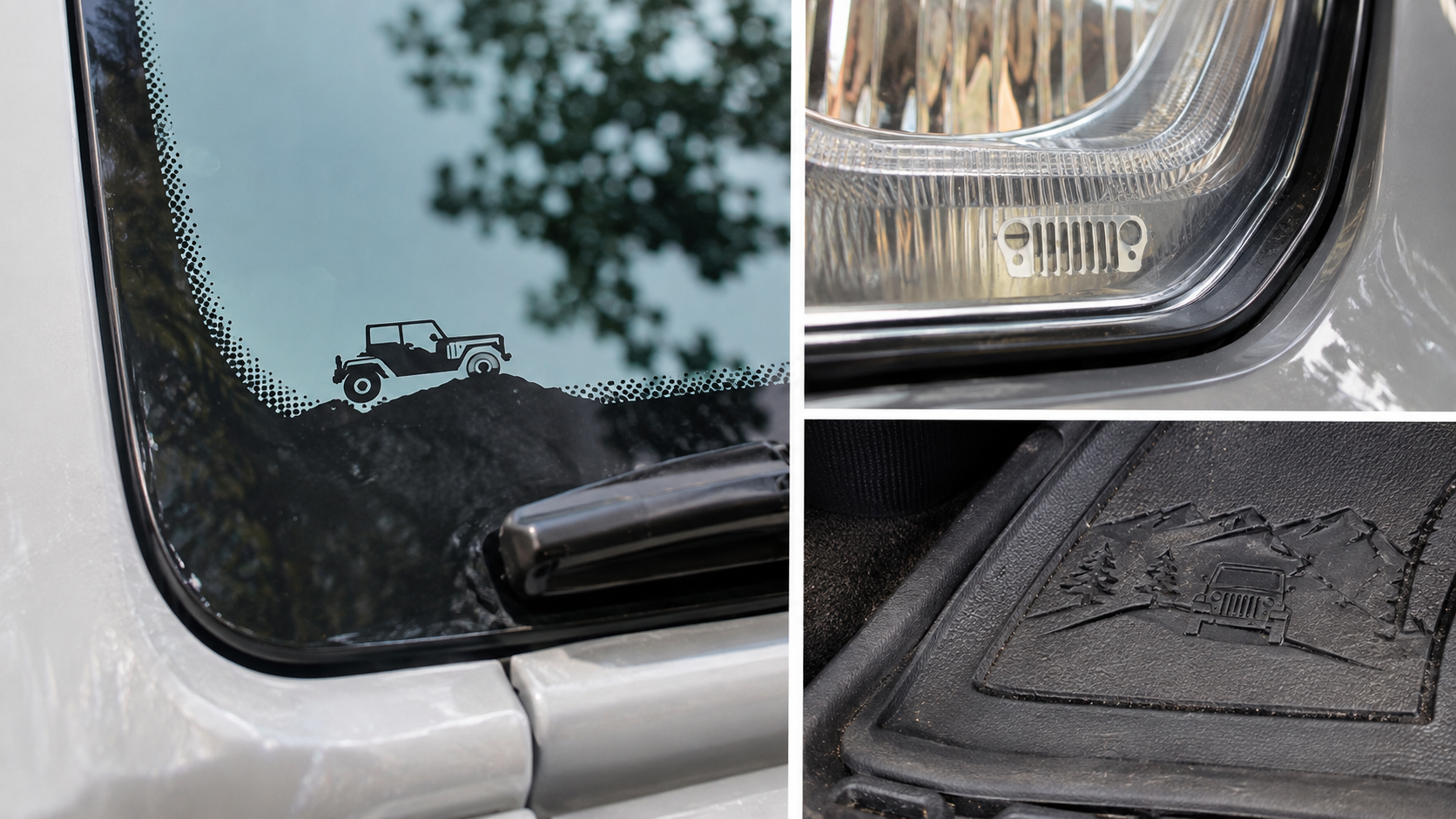
While cleaning your Jeep Wrangler, you notice a tiny vehicle silhouette near the windshield corner. What does that little outline represent? Jeep Easter eggs are intentional design details that reference the brand's heritage, outdoor exploration, or a playful idea. Some sit in glass, while others appear on trim pieces or removable accessories. However, their locations vary across Jeep models and production years. Finding one starts with a closer look at the parts already on your vehicle. What Jeep Easter Eggs Reveal About Jeep Design A Jeep Easter egg is a small graphic or shape that designers place within a vehicle's visible components. It might resemble an older Jeep, the familiar seven slot grille, or an animal. However, these elements do not replace the equipment needed to operate the vehicle. Instead, they add a small discovery to a surface you might overlook. Why would Jeep place a tiny silhouette near a windshield? The design links a modern vehicle with the brand's earlier off road heritage. For this reason, the little vehicle outline serves a different purpose from a mechanical feature. Instead, it represents an idea through a shape that owners can recognize without a label. Jeep has documented the miniature vehicle silhouette on certain Wrangler windshields. The manufacturer has also discussed grille motifs in historical Grand Cherokee headlamp designs. Furthermore, nature inspired graphics appear in documented examples from other Jeep models. These references show how designers work within glass, lighting, and molded trim. A decorative outline has no separate towing, driving, or safety function. However, its position can make an otherwise familiar component worth examining. Therefore, start by identifying the model and year before looking for a particular shape. That information matters because the same design may not carry into another generation. Hidden Jeep Details in Windshields and Exterior Trim Exterior Easter eggs are easiest to notice when light catches a small outline or textured surface. On documented Wrangler versions, a miniature Jeep silhouette appears near a lower windshield corner. Similarly, some historical Grand Cherokee headlamps feature a tiny seven slot grille reference. Furthermore, both examples use parts that already serve essential vehicle functions. Where should you look for a small Jeep on the windshield? Check the visible lower corners of the glass while the vehicle is parked. Still, the marking belongs to certain windshield designs, so its absence does not establish a problem. Additionally, replacement glass may differ from the originally installed windshield. Three exterior areas deserve a careful look: Windshield corners: Examine the glass for a small vehicle outline or another factory graphic. Compare what you find with documented details for your Wrangler's year. Headlamp housings: Look through the clear lens for molded shapes or grille references. However, never open the lamp assembly merely to hunt for artwork. Visible body trim: Inspect accessible cowl panels, exterior moldings, and nearby surfaces for small patterns. Keep your inspection to areas you can see without removing parts. A Jeep Compass gecko is another documented example from selected vehicle versions. However, its placement and presence require verification for the exact model year. Therefore, use photographs of the matching generation as a reference, not as proof of your vehicle's equipment. Jeep Easter Eggs Inside the Cabin Some hidden Jeep details appear where occupants place their hands, drinks, or equipment. Designers may integrate a small outline into molded storage trim or an accessory surface. Furthermore, removable floor mats can display artwork that does not appear on the standard cabin parts. In addition, the location matters because an accessory is not necessarily included with every vehicle. Are Jeep Easter eggs found inside the cabin? Yes. Selected vehicles and accessories have featured subtle grille shapes, trail inspired graphics, and other decorative motifs. However, the exact artwork varies by model and installed components. Therefore, treat an online example as a location clue, not a guaranteed feature. These interior areas offer useful starting points: Storage compartments: Look at exposed walls and molded surfaces in accessible bins. A small graphic may blend into the same texture as the surrounding plastic. Floor mats and cargo liners: Check for scenery or heritage motifs on installed accessories. Replacement mats may carry different designs or no decorative markings. Dashboard and console trim: Examine visible edges and textured panels for small shapes. Do not pull apart trim or disturb switches while searching. For a Wrangler or Gladiator, begin with surfaces you already use during a normal trip. In addition, note whether the vehicle has factory mats or later accessories. That distinction keeps you from attributing every graphic to the original build. Consequently, the owner manual and equipment record can clarify what came with a particular Jeep. Why Jeep Easter Eggs Change Between Models Jeep vehicles share a recognizable design identity, but their component shapes differ. A Wrangler windshield, Compass cowl, and Grand Cherokee headlamp cannot carry identical artwork in every generation. Therefore, designers adapt small references to the space and materials available on each part. A vehicle redesign may also move or replace a graphic entirely. Does every Jeep contain the same Easter eggs? No. The model, production year, trim equipment, and installed parts can change which designs you find. Moreover, the same nameplate may use new glass, lighting, or interior trim after a redesign. A photo from an older Jeep may point you toward an area that looks different today. For instance, the Wrangler windshield silhouette is a documented design, but replacement windshields may lack that marking. Similarly, a graphic on an accessory cargo liner does not guarantee the standard liner carries it. Therefore, distinguish a factory component from an optional or replacement item before drawing conclusions. If you cannot find an Easter egg mentioned online, check the model year attached to that example. Then review photos of the exact component installed on your Jeep. Still, not finding the graphic does not indicate missing required equipment. These small details are decorative, while the vehicle's essential functions remain separate. How to Find Hidden Details on Your Jeep Finding Jeep Easter eggs should feel like a closer look at a vehicle you already know. First, choose a safe place to park, then inspect visible surfaces in good light. For this reason, begin outside and work toward the cabin instead of searching every panel at once. You should not remove glass, lamp housings, or electrical components for this activity. How can you verify that a detail belongs on your Jeep? Match the model year and component against reliable manufacturer information or the exact vehicle. A list may show an older generation or an optional accessory. Therefore, check what is present before expecting a particular animal or silhouette. Use this short discovery checklist: Confirm the model year: Record whether you have a Wrangler, Gladiator, Compass, or Grand Cherokee and identify its year. This narrows the examples. Inspect exterior glass: Look closely at accessible windshield corners for small outlines. Avoid leaning against the glass or disturbing the wiper mechanism. Check visible exterior trim: Look for decorative patterns around accessible lighting and molded panels. Do not remove vehicle components to investigate. Explore cabin surfaces: Examine storage bins, console trim, and installed mats when the Jeep is parked. Remember that accessories can change the artwork. Verify the individual vehicle: Ask about the original equipment and inspect the actual Jeep before assuming a listed detail exists. Photos may miss tiny markings. Still, a Jeep Easter egg is a small reward for noticing the details around you. If you are exploring another model, compare the visible artwork on the exact Jeep you intend to see. Browse new Jeep inventory at Ross Downing CDJR of Mobile. Then inspect available vehicles in person. You may discover a design you had never noticed before.
Jeep Wrangler Mobile AL

Jeep Wrangler Mobile AL Trim Guide for Local Drivers

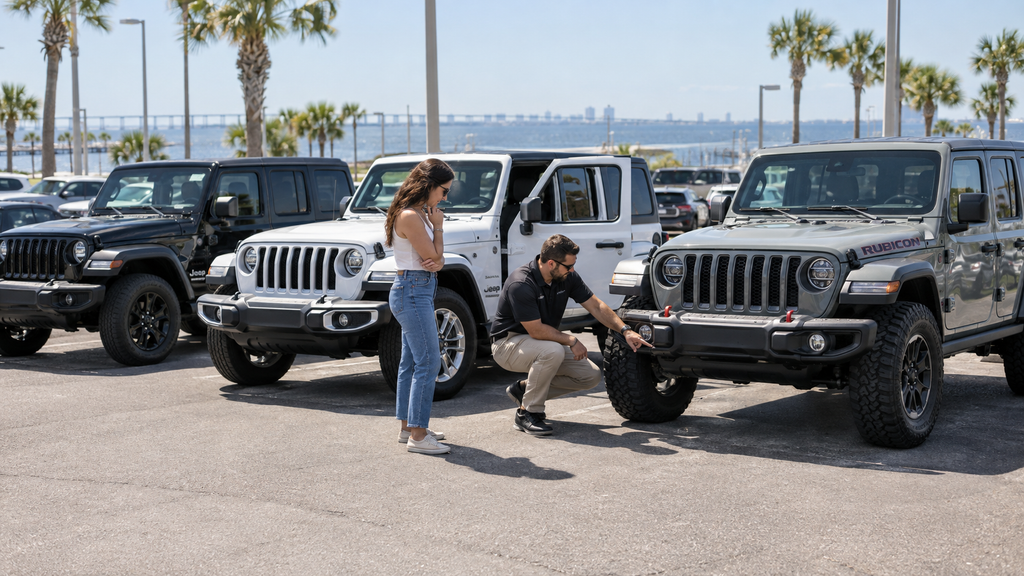
Jeep Wrangler Mobile AL drivers have several trims to compare before choosing the body, roof, and trail hardware they want. Moreover, Sport, Sport S, Willys, Sahara, Rubicon, and Rubicon X each take the Wrangler in a different direction. Therefore, trim choice should start with hardware and cabin priorities before colors or appearance packages. Additionally, the differences reach axles, tires, gearing, roof operation, seating, and comfort equipment. Body style also changes passenger access and cargo space before trim equipment enters the decision. What Changes Across Jeep Wrangler Trims? Wrangler trims change equipment, axle hardware, roof choices, tires, cabin features, and trail focused components. What separates one trim from another beyond price and appearance? The answer starts with which hardware Jeep adds as you move through the lineup. Therefore, the trim ladder works best when viewed as a series of mechanical and cabin changes. Sport provides the core Wrangler foundation with four wheel drive and removable exterior components. In addition, Sport S adds more convenience equipment while keeping the same basic road and trail foundation. Willys moves farther toward uneven terrain with larger tires and a rear locking differential. By contrast, Sahara shifts attention toward passenger comfort and four door travel. Rubicon adds deeper gearing, front and rear lockers, and electronic sway bar disconnect hardware. Those changes matter because each component solves a different problem. A locking differential forces both wheels on an axle to rotate together when traction drops. Moreover, Rock Trac gearing gives Rubicon a lower crawl ratio for slow terrain. Additionally, a disconnecting front sway bar lets the front suspension move more freely across uneven ground. Therefore, start with the job you want the Wrangler to do most. Then compare which trim supplies the hardware for that job. Sport Sport S and Willys Sport, Sport S, and Willys cover the first three major steps in the Wrangler lineup. When does moving above Sport make sense? It makes sense when convenience equipment or trail hardware matters enough to justify the added equipment. Sport keeps the configuration simple. It provides the Wrangler shape, removable doors, four wheel drive, and access to open air roof choices. Therefore, it suits someone who wants the core Wrangler format without paying for hardware they may never use. Sport S keeps that foundation while adding more road focused convenience features. With current equipment packages, shoppers may find power features, added driver aids, and cabin upgrades here. However, the central mechanical layout stays closer to Sport than Willys. Additionally, Willys makes the larger technical jump. It adds 33 inch all terrain tires and a rear locking differential. The locker connects both rear axle shafts so both rear wheels turn together when engaged. Therefore, loose dirt, mud, sand, and uneven ground become easier to cross when one rear tire loses grip. Still, the tire change matters too. Taller all terrain tires add tread suited to loose surfaces and increase the tire sidewall. Additionally, that sidewall can absorb some sharp trail impacts while maintaining useful grip. For Mobile area drivers, Willys can fit weekends that include beaches, campsites, hunting property, or rough access roads. Sport and Sport S remain strong choices when pavement and occasional dirt roads make up most trips. Sahara and Rubicon Sahara and Rubicon sit farther apart in purpose than their similar Wrangler shape may suggest. How do Sahara and Rubicon serve different driving priorities? Sahara adds cabin comfort, while Rubicon concentrates on specialized trail hardware. Moreover, Sahara is offered as a four door Wrangler in the current lineup. Its equipment places more attention on heated seating, automatic climate controls, and road friendly cabin details. Therefore, passengers get more comfort during commuting, highway travel, and longer trips. Rubicon directs more of its equipment budget beneath the body. Front and rear locking differentials let both wheels on either axle rotate together when engaged. Additionally, Rock Trac gearing provides very low gearing for controlled movement across rocks, ruts, and steep grades. The electronic sway bar disconnect changes front suspension movement. A sway bar normally links left and right suspension movement to reduce body roll. When disconnected, the front wheels gain more independent vertical movement. Therefore, each tire can stay in contact with uneven terrain more easily. Rubicon also uses larger trail focused tires and protective hardware aimed at rough surfaces. Sahara does not chase the same degree of specialized trail equipment. By contrast, it spends more of its equipment package on cabin comfort and four door road use. A Mobile commuter who also takes weekend trips may prefer Sahara's cabin priorities. Someone planning regular technical trail travel may place more value on Rubicon hardware. Should Roof and Body Style Shape Your Trim Choice? Body form and roof configuration change passenger access, cargo room, enclosure, and open air operation before trim equipment is considered. Should roof and body style come before final trim choice? Yes, because those choices shape how the Wrangler fits your routine every day. The two door body keeps the Wrangler shorter and gives it a tighter footprint. Rear passengers enter through the front doors after the front seat moves forward. Therefore, regular rear seat use takes more effort than in a four door body. The four door layout adds dedicated rear doors and more interior length. That extra length gives passengers easier entry and leaves more room for cargo. Additionally, some trims, including Sahara, center their packaging on the four door body. Additionally, roof choice creates another major distinction. A soft top can open the cabin quickly and keeps the classic Wrangler feel. The Freedom Top hardtop uses removable roof panels with a more enclosed structure. Sky One Touch adds powered roof movement on equipped four door versions. Which setup works best around Mobile? Think about heat, rain, passenger routines, storage space, and how frequently you plan to open the roof. Therefore, the right roof choice should match how you expect to use the Wrangler between outdoor trips. Removable doors add another layer. Door removal changes airflow, visibility, and the open cabin feel. However, owners also need a safe storage plan for the doors when they come off. Choosing a Wrangler Trim Around Mobile Choosing among Jeep Wrangler Mobile AL trims becomes easier when you compare four areas in order. Start with body form, then roof setup, cabin equipment, and trail hardware. Each choice narrows the next one without forcing you toward the highest trim. Start with passenger needs. A two door body works well for fewer occupants and shorter dimensions. A four door body adds easier rear access and more cargo room. Therefore, body selection can remove several unsuitable configurations early. Next, decide how much open air access you want. A soft top offers simple manual opening. A hardtop adds a more enclosed roof structure. Additionally, Sky One Touch gives equipped four door Wranglers powered roof access. Then move to trail hardware. Sport covers the basic Wrangler foundation. Sport S adds convenience equipment. Willys adds stronger tires and a rear locker. Sahara emphasizes cabin comfort. Rubicon adds front and rear lockers, deep gearing, and sway bar disconnect hardware. Finally, match those choices to where you plan to drive around Mobile and beyond. Coastal trips, city commuting, rough property roads, and technical trails place different demands on a Wrangler. Therefore, choose the trim whose hardware matches those plans. Skip equipment you do not need. Jeep Wrangler Mobile AL shoppers have several clear paths through the lineup. Focus first on the parts you will use, then choose the trim that brings those parts together.

Contact Us

Fill out this form below and we'll contact you shortly
*Required Fields